
How to Choose a Bra for Large Breasts: Comfort and Support That Feel Right
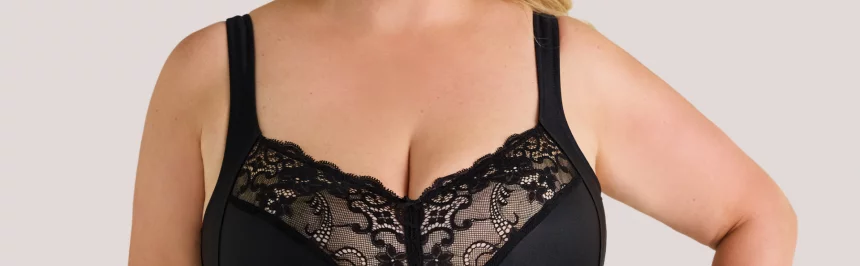
How to Choose a Bra for Large Breasts: Comfort and Support That Feel Right
Finding a beautiful bra is one thing. Finding one that still feels comfortable after a full day is something else entirely.
For women with a fuller bust, the difference often comes down to fit and construction. A bra may look right at first glance, yet after a few hours the straps begin to dig into the shoulders, the band moves upwards or the cups no longer feel as supportive as they did in the fitting room.
It does not have to be this way.
A well-fitting bra for a fuller bust should provide reliable support while still allowing your body to move naturally. It should feel secure without feeling restrictive and supportive without being unnecessarily heavy.
With decades of experience in lingerie design, we have learned that good support is rarely created by one feature alone. The band, cups, straps and overall construction need to work together. When they do, you notice the bra less — and your own natural confidence more.
So, how to choose a bra for large breasts? Here are the details that truly matter.
Start With the Right Size, Not the Bra Style
Before thinking about lace, colour or whether you prefer an underwired or non-wired bra, start with fit.
Even the most carefully designed supportive bra for large breasts cannot do its job properly if the size is not right.
Your bra size consists of two elements: the band size and the cup size. Both matter, and they work together.
If the band is too loose, it may move upwards at the back and leave the shoulder straps doing more of the work. If the cups are too small, breast tissue may spill over the top or sides. Cups that are too large, meanwhile, can wrinkle or leave noticeable empty space.
If you have not measured yourself recently, it is worth doing so before choosing a new bra. Bodies naturally change over time, and the size you have been buying for years may no longer offer your most comfortable fit.
Once you know your starting size, pay attention to the bra itself. The number and letter on the label are useful guides, but the way the bra fits your body is what really matters.
A Supportive Band Makes a Big Difference
When looking for bras for large breasts, it is easy to focus almost entirely on the cups and straps. Yet the band deserves just as much attention.
A well-fitting band creates a stable foundation around the body. It should sit relatively level across your back rather than riding upwards as you move.
Try lifting your arms and moving naturally. If the band shifts significantly, it may be too loose.
On the other hand, support should never mean discomfort. A band that leaves you feeling restricted, pinches noticeably or makes you eager to remove the bra is not the goal.
The right feeling is somewhere in between: close, stable and comfortable.
For a new bra with several hook positions, starting on the loosest comfortable hook usually gives you room to adjust the band later as the elastic naturally changes with wear.
Look for Cups That Support Your Whole Bust
Cup shape becomes especially important with a fuller bust.
A good cup should comfortably contain the breast without cutting into the tissue or creating unnecessary pressure. Look at the top of the cup as well as the area underneath your arms.
Breast tissue spilling over the cup is usually a sign that you need more room or a different cup shape. Noticeable wrinkling or empty space can suggest that the cup is too large, although sometimes the size is right and the shape simply does not suit your body.
This is why trying more than one style can make such a difference.
For many women with fuller breasts, full cup bras can be a comfortable everyday option because they provide more coverage and help distribute support across a larger area. But there is no rule saying that every woman with a larger bust must wear a full cup.
Your breast shape, personal preferences and daily routine all matter.
The best cup is the one that comfortably follows and supports your natural shape.
Wider Straps Can Add Comfort — but They Should Not Do All the Work
If you have ever ended a long day with deep strap marks on your shoulders, it can be tempting to assume that stronger or tighter straps are the answer.
Wider straps can certainly feel more comfortable for a fuller bust because they spread pressure across a broader area. Padded or softly constructed straps can also be pleasant for everyday wear.
But straps should not be responsible for all of the support.
If you need to tighten them significantly just to keep your bust supported, look at the band and cup fit as well. The entire bra should be working together.
Straps should sit comfortably on the shoulders, stay in place and provide additional stability without digging in.
Small adjustments matter too. Shoulder straps can loosen with wear, so checking their length from time to time is worthwhile.
Underwired or Non-Wired: Which Is Better for Large Breasts?
This is one of the most common questions when choosing a bra for a large bust, and there is no single answer that suits everyone.
A well-fitting underwired bra can provide defined support and help keep the bust comfortably positioned. The underwire should follow the breast rather than sitting on breast tissue, and it should remain comfortable when you sit, walk and move.
If the wire repeatedly pinches or presses, do not assume that discomfort is simply part of having a larger bust. Check the size and cup construction.
Non-wired bras can also be a comfortable choice for fuller breasts when their construction provides the support you need. A supportive band, thoughtfully shaped cups and suitable materials can all contribute to stability without an underwire.
Ultimately, the better option is the one that works for your body.
Some women prefer underwired bras throughout the day. Others feel most comfortable without wires. Many keep both styles in their lingerie drawer and choose according to what they are wearing and what the day looks like.
Comfort is personal.
Pay Attention to the Centre of the Bra
There is a small area of a bra that is easy to overlook: the centre between the cups.
In many underwired styles, this part should sit comfortably against the body rather than floating noticeably away from it. If it does not sit as intended, the cups may not have enough room or that particular construction may not suit your breast shape.
The important word here is comfortably.
Nothing should press painfully into the skin.
Bra fitting is not about following a rigid checklist at the expense of comfort. These signs are there to help you understand how the garment is working with your body.
Side Support Can Be Especially Useful
For a fuller bust, support is not only about what happens at the front.
The sides of the bra can make a noticeable difference to how secure and comfortable the overall fit feels. Some bras use additional side panels or carefully shaped cup sections to help guide and support the breast from the sides.
This can be particularly useful when you want the bust to feel comfortably contained without relying on overly tight straps.
When trying a bra, look at the area underneath your arms. The cup should contain the breast tissue comfortably, while the side of the bra should feel stable without cutting into your body.
At Rosme, we have decades of experience designing ergonomic lingerie, and this attention to construction is central to our approach. Our lingerie is produced in Europe with a focus on quality, comfort and thoughtful fit.
Do Larger Breasts Need a Padded Bra?
Not necessarily.
Padding and support are not the same thing.
A padded bra can provide a particular shape, additional coverage and a smooth appearance underneath clothing, but padding itself does not determine how supportive a bra will be.
An unpadded or lightly lined bra can also provide excellent support when the band, cups and construction are designed appropriately.
This is good news because it gives you more freedom.
You do not have to choose a heavily constructed bra simply because you have a fuller bust. Instead, think about what you want from your lingerie.
Do you prefer a natural shape? More coverage? A smoother appearance underneath fitted clothing? A lighter feeling for everyday wear?
Choose according to your comfort and your wardrobe rather than a rule about what women with larger breasts are supposed to wear.
The Fabric Matters More Than You Might Think
Fit is essential, but materials also influence how a bra feels throughout the day.
With a fuller bust, the fabric needs to balance comfort with enough stability to support the bra's construction. If every part of the bra stretches too freely, it may not remain as stable during movement.
At the same time, a supportive bra does not need to feel rigid.
Soft materials can be combined with more stable sections in carefully chosen areas, allowing the bra to feel pleasant against the skin while maintaining its shape.
Quality becomes particularly noticeable after repeated wear. A bra is an everyday garment, after all, and it needs to perform beyond the first fitting.
We pay close attention to both comfort and quality because we believe lingerie should feel good not only when you first put it on, but throughout real everyday life.
Do You Need a Minimizer Bra for a Large Bust?
A minimizer bra can be useful if you personally prefer the effect it creates, particularly underneath certain clothes. Its construction redistributes the breast tissue to create a visually more streamlined silhouette.
But having larger breasts does not mean you automatically need a minimizer.
You do not need to make your bust look smaller to find a comfortable bra.
If your priority is everyday support, begin with fit. A correctly fitting full cup, underwired or non-wired bra may already give you exactly the comfort and shape you are looking for.
A minimizer is an option, not a requirement.
What Is the Best Bra for Large Breasts?
It would be convenient if there were one universal best bra for large breasts, but women's bodies are far too individual for that.
The best bra is the one that fits your proportions and meets your needs.
For one woman, that may be a full cup underwired bra with wide adjustable straps. For another, it could be a carefully constructed non-wired style. Someone else may prefer a lighter cup for everyday wear and more structured support for particular outfits.
Instead of searching for one supposedly perfect model, focus on the qualities that make a bra work for you.
Ask yourself: does the band stay in place? Do the cups comfortably contain the whole breast? Are the straps comfortable? Does the bra support you without creating painful pressure? Can you move freely? And, importantly, do you still feel comfortable after wearing it for several hours?
Those answers tell you far more than a product label ever could.
Common Bra Problems for a Fuller Bust
Sometimes understanding what is wrong makes finding the right bra much easier.
If your straps dig into your shoulders, check whether the band is providing enough stability before simply loosening or tightening the straps.
If the band rides up your back, it may be too loose.
If your breasts spill over the top or sides of the cups, you may need a larger cup or a different cup construction.
If the cups wrinkle, there may be too much room or the cup shape may not match your breast shape.
If the underwire presses into breast tissue, check the cup size and the position of the wire.
And if everything appears correct but the bra simply does not feel comfortable, try another style.
Sometimes a bra can technically be close to the correct size and still not be the right bra for your body.
Try Your Bra the Way You Will Actually Wear It
A fitting room mirror can tell you a lot, but standing still is only the beginning.
Raise your arms. Sit down. Turn your upper body. Walk around for a moment.
Your bra should stay comfortably in place while you move.
Pay attention to whether the band begins to ride up, the cups shift or the straps suddenly feel uncomfortable. Think about how the bra will feel after several hours rather than only during the first minute.
This is particularly important when choosing comfortable bras for large breasts, because support needs to work in real life, not only while standing in front of a mirror.
A bra that allows you to forget about it during the day is often doing its job very well.
Your Breast Shape Matters Too
Two women can wear the same bra size and still need completely different bra styles.
Breasts can be fuller at the top or bottom, sit closer together or further apart, have a broader or narrower base, and naturally change in shape throughout life.
None of these differences are problems that need to be corrected.
They simply help explain why one bra can feel wonderful on one woman and less comfortable on another.
This is also why we believe in designing for real women's bodies rather than expecting every body to fit one shape. Our approach embraces diversity in age and size, with comfort and natural confidence at its centre.
Give yourself permission to try different constructions. Finding your favourite bra style can be just as important as knowing your size.
A Simple Checklist for Choosing a Bra for Large Breasts
Before choosing your next bra, check a few essentials:
The band sits securely and relatively level around your body.
The cups comfortably contain the whole breast.
There is no significant spilling, gaping or wrinkling.
The straps stay comfortably in place without carrying all the support.
The underwire, when present, follows the breast without pressing painfully into breast tissue.
The sides of the bra feel stable and comfortable.
You can breathe, sit and move naturally.
The bra feels supportive without feeling restrictive.
Most importantly, you feel comfortable in it.
A fuller bust does not mean you should have to compromise on comfort or style. The right construction can provide both.
Frequently Asked Questions About Bras for Large Breasts
What type of bra is best for large breasts?
There is no single bra style that is best for every fuller bust. Full cup bras, supportive underwired bras and well-constructed non-wired bras can all be good options. The right choice depends on your size, breast shape, desired level of support and personal comfort.
Are full cup bras good for large breasts?
Full cup bras can be particularly comfortable for fuller breasts because they offer more coverage and can help contain and support the whole bust. However, the correct size and cup shape remain essential.
Are wide straps better for large breasts?
Wider straps can help distribute pressure more comfortably across the shoulders. However, straps should complement the support provided by the band and cups rather than carry the weight of the bust alone.
Can women with large breasts wear non-wired bras?
Yes. A non-wired bra can provide comfortable support for a fuller bust when its band, cups and materials are designed appropriately. Whether it provides enough support for you depends on the individual bra and your personal preferences.
Should I choose a larger band size for a large bust?
Not simply because your breasts are larger. Your band size should correspond to your underbust and fit securely around your body. Choosing an unnecessarily loose band can reduce stability and support.
Why do my bra straps dig into my shoulders?
The straps may be too tight, but the overall bra fit should also be checked. If the band is too loose or the cups do not fit correctly, the straps may end up doing more work than intended.
Why does my bra band ride up at the back?
A band that repeatedly rides upwards may be too loose. Try checking your measurements and comparing a more suitable band size while keeping in mind that changing the band may also require adjusting the cup size.
Are padded bras better for a fuller bust?
Padding does not automatically mean better support. Both padded and unpadded bras can work beautifully for fuller breasts when their overall construction and fit are right.
Support Should Feel Natural
Choosing a bra for a fuller bust should not be about hiding, reducing or changing your body. It should be about finding lingerie that works naturally with it.
Start with the right size. Look for a stable, comfortable band and cups that properly contain your breasts. Pay attention to the straps, sides and overall construction. Then move around and see how the bra feels in real life.
Above all, listen to your body.
For decades, we have designed lingerie around real women's needs, combining European production with thoughtful construction, comfort and an inclusive approach to fit. Our philosophy is simple: lingerie should respect your body rather than ask your body to adapt to it.
A fuller bust deserves the same thing every woman deserves from her lingerie: a fit that feels comfortable, supportive and naturally yours.
Explore our bra collection and find the support that feels right for you.